

Ever wondered why some golfers make par look so easy while others keep missing it? Hitting par isn’t just about counting strokes, it’s a mix of skill, the right club pick, and solid game plans. Every hole, from a short par-3 to a tough par-5, challenges you in its own way. In this guide, we break down what par really means in simple terms and share tips that could give your game a boost. Stick with us, and you just might see your round in a whole new light.
Par Golf Defined: Understanding the Standard Score in Golf
Par is the basic score a golfer is expected to make on a hole or an entire round. Each hole gets its par number based on its length and tricky spots like hazards or a difficult green. Most 18‐hole courses add up to a par of 72 with a mix of par-3s, par-4s, and par-5s.
On a par-4, players try to hit the green in two strokes and then finish with two putts. That makes it a four-stroke hole where both accuracy and controlled power matter. For par-5 holes, the plan is three strokes to reach the green plus two putts afterward. This setup shows that longer holes naturally call for a few extra shots. Not everyone can hit par on every hole, that’s usually the mark of a really skilled player.
Before stepping onto championship fairways, some legends worked hard on courses where every stroke counted. Par has always been a true test of skill. Every hole challenges a different part of your game, from a well-placed drive to a neat putt. Knowing the par helps you pick the right club and plan your shots smartly, making each round a chance to improve and enjoy the game.
Par Golf Fundamentals: Hole Types and Typical Par Values

Every golf course mixes in different types of holes to keep players on their toes. Par-3 holes are short, usually between 100 and 250 yards. On these holes, you want to hit the ball onto the green in one swing and then sink two putts. They really test how accurate your swing is.
Par-4 holes range from 250 to 500 yards. These holes blend length with smart shot choices. You typically aim to reach the green in two shots and finish off with two putts. It’s a nice mix of power and a gentle touch around the green.
Par-5 holes stretch past about 450 yards, opening up more exciting risk-reward moments. Here, players plan on taking three shots to get to the green before finishing with two putts. These holes call for careful planning and the ability to handle longer distances while watching out for hazards.
The total par of a course is simply the sum of all its holes. This total factors in the hole lengths, hazards, and tricky layouts of greens. Knowing what each hole requires lets you tailor your strategy, using sharp accuracy on par-3s and solid power on par-5s.
| Hole Type | Typical Yardage | Expected Par Score |
|---|---|---|
| Par-3 | 100-250 yards | 3 |
| Par-4 | 250-500 yards | 4 |
| Par-5 | 450+ yards | 5 |
Interpreting Par Golf on Your Scorecard
A golf scorecard is your go-to guide on the course. It tells you the par for each hole and the total par for the entire round. Every hole has a par set based on its length and tricky design features like hazards and tight greens. This means you know how many strokes you should ideally take to complete each hole, so you can decide when to take a risk or play it smart.
Key scoring terms to know:
| Term | Description |
|---|---|
| Birdie | One stroke under par on a hole |
| Bogey | One stroke over par on a hole |
| Eagle | Two strokes under par, a sign of a great hole |
| Condor | Four strokes under par, a super rare feat often linked to a hole-in-one on a par-5 |
Using your scorecard to jot down these terms keeps you updated on your progress. It’s a simple tool that helps you tune your approach every round, making each shot count and keeping the game both fun and strategic.
Par Golf vs Birdie and Bogey: Scoring Comparisons

Score comparisons really help shape your game plan on the course. Picture a par-4 where you’d normally need two shots to reach the green and two putts to finish. When a golfer sinks the ball in three strokes, it shows they nailed a smart shot and were ready to push their limits.
These outcomes give you a clue on when to go for a bold move or play it safe as you progress through your round. Detailed explanations of par, birdie (one stroke under par), bogey (one stroke over par), eagle (two strokes under par), and condor (four strokes under par) show up in the Interpreting Par Golf on Your Scorecard section.
Strategies for Consistent Par Golf Performance
On par-5 holes, it pays to mix a smart risk with careful play. You can try a bold drive to get onto the green sooner, but always keep control of your shot. For par-3 holes, a safe game works best, stick with a club you trust instead of stretching for extra distance.
Top players often chase scores under par by taking bold swings when the moment feels right. Meanwhile, many recreational golfers aim simply to hit par or play within their handicap. Know where you stand so you can set realistic, game-improving goals.
Your club choice makes all the difference. When a par-3 calls for precision over power, choose a club that gives you controlled accuracy. Think of it like picking the perfect tool from your toolbox, each club is meant for a specific kind of shot.
Today, score-tracking apps are a handy ally on the course. They let you record every shot, break down your performance by hole type, and tweak your strategy on the fly. After your round, take a minute to look at your stats. Maybe remember that par-5 where a smart risk paid off, and try to repeat that same decision when you spot a similar chance.
Simply put, let par guide you. Focus on choosing the right club, managing your risks, and using digital feedback to keep your game steady and boost your overall performance.
Handicap and Par Golf Benchmarks: Measuring Your Progress
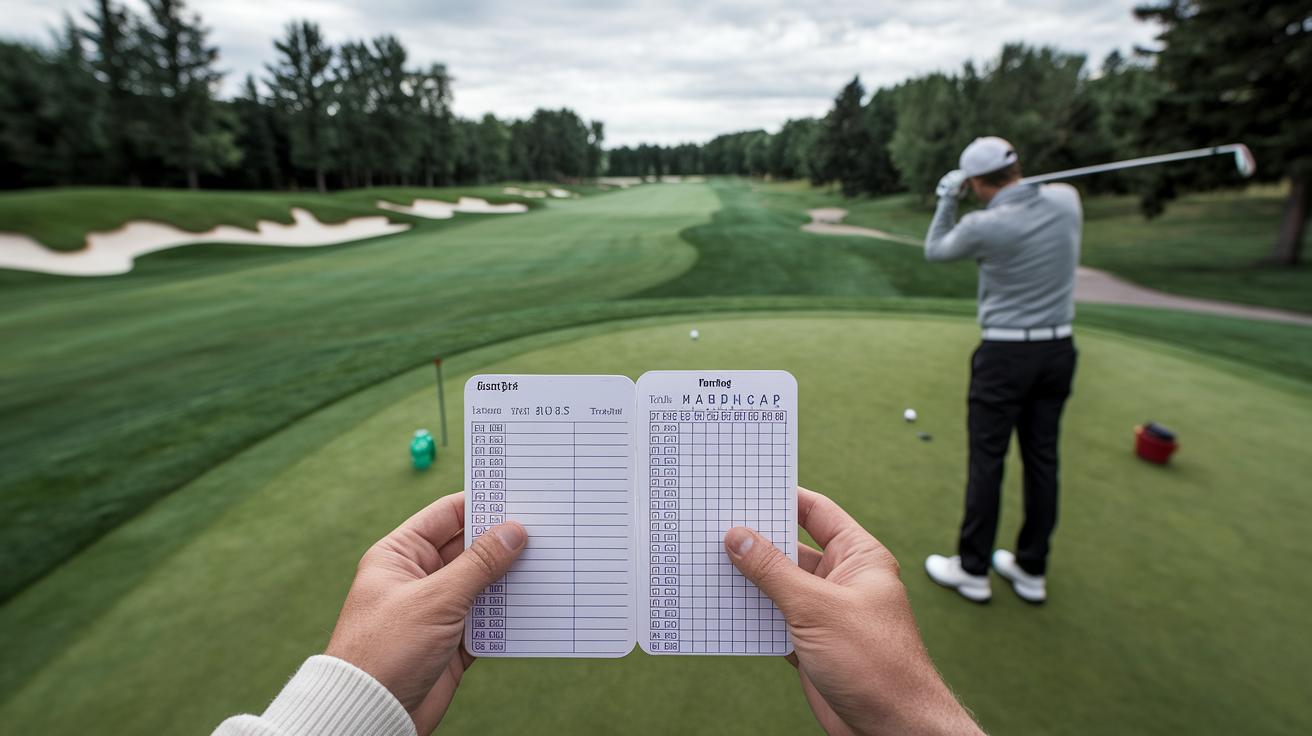
Tracking your golf scores means comparing them to par. Golfers use a handicap system to adjust their scores, which helps match your skill against the course. This makes it easier to set goals and see how you’re improving each round.
On the PGA Tour, pros hit roughly 60.72% of fairways and make about 50% of their 8-foot putts. Even the best players have off days, showing that golf is tough even at the highest level. On the other hand, a typical 20-handicap amateur might see around 6.5 double bogeys in one round. It reminds us that getting closer to par takes steady practice and smart play.
A handicap system also lets you track your win streaks and learning moments. Keeping a close eye on your pars, birdies (one stroke under par), and double bogeys can really show what you’re nailing and what needs work.
Key points to check:
| Benchmark | What to Watch |
|---|---|
| Fairway hitting | Percentage of fairways hit |
| Short game putting | Success rate on short putts |
| Strokes relative to par | How many strokes over or under par per hole |
When you compare your stats to these benchmarks, you can see if your game plan is working or if you need a tweak. Whether you’re chasing pro-level numbers or just trying to beat your last score on a weekend, tracking these details can help you fine-tune your play and enjoy golf even more.
Final Words
In the action, we broke down what par golf really means and how each hole's design shapes your score. We looked at the basics, from standard par definitions to essential scoring terms like birdie (one under par) and bogey (one over par), and shared tips for a steady performance. Each section helped reveal how par can guide your approach on the course. Enjoy the game and keep sharpening your skills, one swing at a time.
FAQ
What is a par in golf for 18 holes and are all courses par 72?
The par in golf represents the expected strokes for an expert to finish an 18‐hole course, typically 72 strokes. Course designs vary, so not every course uses a 72 total.
What is par in golf for 9 holes?
For a 9‐hole course, par usually totals about half that of an 18‐hole course—roughly 36 strokes. However, this can change with different course layouts and hole challenges.
What is a par 3?
A par 3 is a hole where an expert should reach the green in one hit and finish with two putts, making three strokes total. The hole is typically shorter and demands precise play.
What is Par Golf store?
Par Golf store is a specialist retailer offering golf gear, clubs, accessories, and apparel for enthusiasts, providing quality products both on and off the course.
What are Par golf rules?
Par golf rules define the expected strokes needed for each hole. They offer a benchmark to measure performance and help golfers manage their game during a round.
What is PAR golf San Diego?
PAR golf San Diego is a local branch of a golf retail brand that offers quality equipment, apparel, and accessories for golf lovers in the San Diego area.
What is Par Golf Columbus?
Par Golf Columbus serves the local golfing community by providing a range of quality gear and apparel. The store supports enthusiasts with expert service in the Columbus region.
What is a par golf scorecard?
A par golf scorecard lists each hole’s par value and the overall course par, allowing players to track their strokes and compare their performance against standard expectations.