

Ever wonder why golf talk seems like a secret code? When you hear words like ace (a shot that goes straight in) or birdie (finishing one stroke under par), they spark a thrill like landing that perfect shot. This guide lays out those fun golf words in plain, simple language so you can follow the game easily, whether you’re just starting or have been a fan for years. Get set to see how each term adds its own kind of magic on the course and jump right into the action with every call.
Golf Commentary Terminology Explained: Essential Terms and Definitions
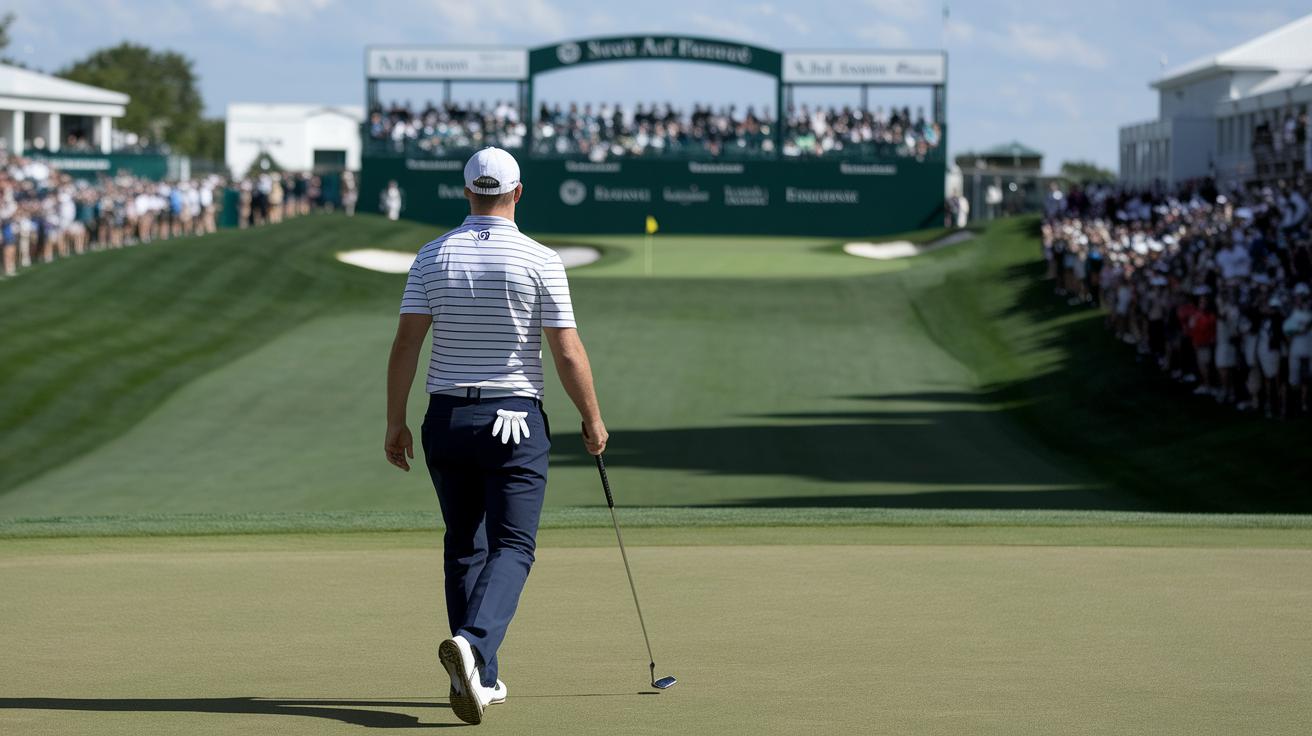
When you tune in to a golf broadcast, you instantly feel the excitement when you hear words like "ace" or "birdie." These simple terms bring every moment on the course to life. Think of an ace as that magical, unforgettable moment, a hole-in-one off the tee that sends cheers echoing through the air.
Learning these basics isn’t just for newcomers; even seasoned fans appreciate how they add color to every call. Picture hearing, “That birdie really turned the tide,” and instantly knowing the shot was one stroke under par. It’s like having a mini scorecard in your pocket, making every statistic crystal clear.
Below is a handy guide to the must-know golf terms:
| Term | Description |
|---|---|
| Ace | A hole-in-one off the tee |
| Birdie | One stroke under par |
| Eagle | Two strokes under par, marking an impressive play |
| Albatross | Three strokes under par, usually on a par-5 and very rare |
| Condor | An extraordinary hole-in-one on a par-5 |
| Bogey | One stroke over par, a common but important benchmark |
Knowing these terms lays a strong foundation for following live golf commentary. They transform everyday play descriptions into vivid recaps that capture every thrilling moment. With this glossary at your fingertips, you’re all set to dive deeper into the lively and colorful language of golf.
Golf Commentary Terminology Explained: Course and Shot Language

A dogleg is when the fairway curves, so golfers must change their aim in the middle of their shot. Commentators might say, "That dogleg made him adjust his course," pointing out how it forces a change in strategy.
A divot is the small patch of turf that flies up when a club hits the ball. Sometimes you’ll hear, "Check out that big divot after his swing," showing off both the power of the shot and a little mis-hit.
An approach shot is aimed from at least 100 yards away and is meant to land the ball on the green. When the shot lands perfectly, you might hear, "What a masterful approach, landing it right in the sweet spot!" In contrast, a chip is a gentle shot played very near the green, where the ball softly hops onto the putting surface. A call might go, "She chipped it perfectly, rounding up the hole."
A hook is a shot that curves sharply from right to left for right-handed players. On the flip side, a slice curves from left to right. During a broadcast, you might catch a comment like, "His hook was aimed right at the pin," or, "That slice sent the ball drifting into the rough," both of which bring the excitement of the swing to life.
Golf Commentary Terminology Explained: Caddie and Live Event Jargon

Live golf broadcasts are a lot like chatting with a buddy who's in the know. When you tune in, understanding a few key terms can really boost your enjoyment. Take the foursome, for instance. This is when two teams take turns hitting the ball until the hole is done, showcasing smart teamwork. You might hear a commentator say, "Those foursome tactics are keeping the match exciting," and it’s clear that strategy and collaboration are at play.
Then there's play through. This term is used when a faster group is given a courtesy pass to move ahead of a slower group. If you catch a broadcast, you might hear, "The group ahead is playing through," which signals that everyone’s keeping the game moving smoothly.
Now, imagine a mulligan. In friendly rounds, a mulligan is like a casual do-over on a tough shot. You might hear, "He took a mulligan on that tricky lie," highlighting the laid-back spirit of the round, even though mulligans aren’t allowed in official tournaments.
And don't forget the Gilligan. This is the name for that one spectacular shot that gets everyone buzzing, sometimes even earning a replay if everyone agrees. Picture a commentator exclaiming, "That Gilligan has got everyone talking!" It’s moments like these that add extra flair to the game.
For more on these lively terms, check out profiles of famous golf commentators.
Golf Commentary Terminology Explained: Greenside and Clubhouse Terms

When you hear "pin," think of it as another name for the flag on the green that helps a golfer line up their shot. Commentators love pointing out where the pin is because its spot can make a shot really challenging. On the flip side, an "unplayable lie" means your ball has landed in a tough spot, forcing you to take a penalty drop. You might catch someone saying, "That unplayable lie means a drop, rough break on this hole!"
A "shank" happens when the ball gets hit with the inside part of the club, sending it wildly off track. Broadcasters often mention shanks because that kind of mis-hit can change the whole feel of a round. Then there’s a "whiff", when a player swings and totally misses the ball, yet the swing still counts as a stroke. Imagine an announcer remarking, "That whiff cost him a stroke at a crucial moment!"
The term "yips" refers to those sudden muscle spasms that mess up a player's short game, especially on putts or chips. Commentators notice when a golfer starts getting those jitters and how it throws off their rhythm. You might hear, "He’s battling the yips today, and it’s really messing with his putting!"
Golf Commentary Terminology Explained: Historical Origins and Evolving Broadcast Style

Golf’s classic phrases started on the rugged Scottish links, where early players battled winds and wild terrain. Back then, locals and fans mixed everyday words with island traditions that brought the game to life. Those colorful terms echo a time when every hole had its own story and the spirit of friendly competition was as warm as a neighbor’s smile.
Today’s broadcasts keep that old charm while sounding relaxed and modern. Announcers chat like friends, pausing just long enough to make you feel the crisp crack of a perfect swing. Their words paint clear, vivid pictures of each shot while still tipping their hat to golf’s deep history. It’s like enjoying a good story shared between buddies on the back nine.
Final Words
In the action, we explored essential shot and scoring terms, from ace, a hole-in-one off the tee, to birdie and eagle. We broke down on-course features like dogleg and divot, alongside callouts heard during live events.
These insights bring golf commentary terminology to life, making every broadcast clearer and more fun. They help us feel the pulse of each play and add extra excitement to the game. Enjoy the game with a fresh set of terms that make every moment count!