

Ever thought about what it takes to swing like a pro? Golf is a game for everyone, even if you’re just starting out. It begins with easy steps, like getting the right starter clubs and practicing your grip.
Imagine the crisp crack of the club as you hit the ball. When you master the basics, your confidence grows with every swing. A few simple techniques can change an average round into something exciting and full of promise.
So, if you’re ready to hit the green with a smile, grab your clubs and get swinging. You might just discover the thrill of your very own perfect shot!
Golf Basics for Beginners: Understanding the Game

Getting to know the basics is super important when you're out on the course. Every skilled golfer began by learning the simple steps and techniques. As you build confidence, your focus sharpens and your swings feel more natural.
Every 18-hole course is planned with care. Each hole comes with a par value, which is the number of strokes you’re meant to take, and yardages that show the distance from the tee to the green. You’ll see a mix of long fairways, clever hazards, and tricky greens. This design helps you pick the right club and plan your shots, adding both fun and strategy to your game.
Playing by yourself lets you zero in on your swing and technique, while playing with others brings a lively vibe and friendly challenges. Most rounds last around four to five hours, giving you plenty of time to take in every part of the course and learn at your own pace.
It’s also good to learn a few simple golf terms. A stroke is each time you swing the club, par is the expected number of strokes for a hole, birdie means you finished a hole one stroke under par, and bogey is one stroke over par. Knowing these terms makes it easier to keep score and track your progress as you enjoy the game.
Choosing Starter Clubs for Beginners
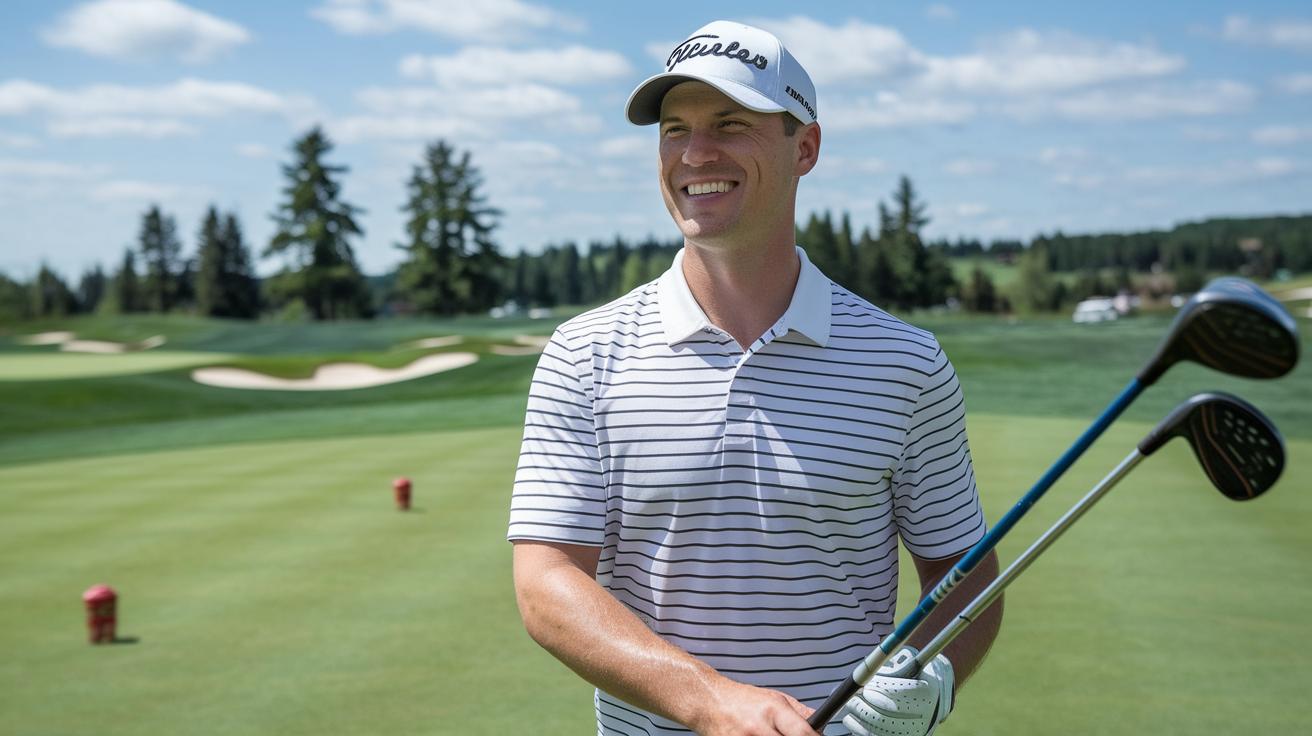
Getting the right clubs can change your game completely. A set that feels right boosts your confidence and lets you swing with ease, giving you a strong start to improve your skills.
| Club Type | What It’s For | Why Beginners Like It |
|---|---|---|
| Driver/Wood | For long tee shots | Makes it easier to clear fairways |
| Hybrid/Fairway | Great for different fairway lies | Simpler to hit than irons |
| Irons | For straight, precise shots | Reliable for approach play |
| Wedges | For short shots with spin | Perfect for delicate shots around the green |
| Putter | For finishing on the green | Helps build confidence with putts |
When you're just starting out, many new golfers find that a bag with 7 to 10 clubs is best instead of a full set of 14. This keeps your game simple and focused. Take time to try out different clubs until you feel which ones work best for you. You might even use a tool like Wilson Fit AI™ to pick clubs that match your swing and build. Imagine a beginner who once struggled until a fitting session turned everything around, kind of like a chef finding his favorite knife for every dish. Starter sets are a smart way to get quality clubs without breaking the bank, and many stores offer affordable options to help you learn proper swing mechanics. Investing in clubs that fit you well not only speeds up your progress but also makes you feel ready every time you head to the course. And checking in with a pro fitter every now and then will help keep your edge as your game grows.
Fundamental Swing Techniques for Beginner Golfers

A sound swing is really the heart of a great golf game. When your swing is smooth and well-practiced, you hit the ball with the right path every time. It makes you feel good on the course and boosts your confidence with each shot you take.
Good swings start with the basics, grip and stance. A reverse overlap grip is when your fingers lock in a way that keeps the club steady, so you can adjust your swing easily. Stand with your feet about as wide as your shoulders to stay balanced, and line up squarely with your target. This setup is just like double-checking your aim before you take a shot. With a proper grip and stance, you can rotate easily during your backswing and finish with a solid follow-through. Even small tweaks can make a big difference, much like choosing the right club at the right time.
Here’s a quick five-step guide to nail your swing:
- Setup and Address – Stand with your feet shoulder-width apart, hold the club comfortably, and aim straight at your target.
- Takeaway – Begin your swing slowly by turning your shoulders while keeping your arms steady.
- Backswing Rotation – Rotate your upper body confidently, keeping your grip firm, and let the club rise smoothly.
- Downswing Transition – Shift your weight forward as you unwind your torso, getting ready for that crisp impact.
- Follow-Through Balance – Wrap up your swing by letting your body move naturally, ending in perfect balance.
Watching video tutorials or practicing with a mirror drill can help a lot. Recording yourself gives you a chance to notice small improvements that make your swing feel more natural and consistent. Enjoy the process, every small step brings you closer to a more confident game!
Golf Rules and Etiquette Essentials for Beginners

If you're new to golf, here are some simple rules that keep the game fair and fun. First off, you can only have up to 14 clubs in your bag during a round. And when you hear "play the ball as it lies," it means you must hit the ball where it is, without moving or improving its spot. This rule sets the stage for honest play.
Sometimes, mistakes happen. You might get a penalty stroke if you hit into a hazard or mishandle your shot. And if you think your ball is lost, you can hit a provisional ball to save time. Turns are usually taken by the player farthest from the hole, and the tee box rules help everyone start on an even playing field.
Keeping a steady pace is important, too. Slow play can hold everyone up, so be mindful of your timing. Also, it’s respectful to stay quiet during someone's swing so that everyone can concentrate on their shot.
Taking care of the course is part of good golf manners. Fix any divots you make or smooth out the bunkers after you hit. And if there's a chance a stray ball might hit someone, shout "Fore!" to warn others and keep everyone safe.
Practice Strategies for Golf Beginners

Sticking to a regular practice plan builds a strong foundation and sharpens your skills quickly. Picture a golfer who practices his swing daily at the range and starts seeing improvements in just a few weeks.
At the range, drills really pay off. Try target practice by aiming at marked areas to boost your accuracy. Also, work on your distance control with irons (shorter clubs for near shots) and wedges (clubs used for short, high-arching shots). For example, aiming for different markers can make the whole field seem smaller and help you pick the right club with more confidence.
Even at home, easy routines do a world of good. Using a putting mat, alignment sticks, and a chipping net can turn your backyard or garage into a mini course. Imagine setting up a little station where each putt and chip adds a new bit of polish to your game.
Don’t forget swing-analysis apps and video feedback. Recording your swing on your phone lets you spot small tweaks that could help a lot. It’s like having a personal coach cheering you on to that perfect swing every time.
Finding Lessons and Facilities for Beginners in Golf

Group clinics are a friendly way to learn golf basics. Many clubs host these sessions so you can practice with others who are just starting out. It’s a fun and relaxed spot to pick up key tips and basic rules of the game.
Private coaching is also a great option if you want one-on-one help. These lessons usually start around $50 a session. With a private coach, you get advice tailored just for you and your swing.
Many public golf courses have special days for beginners. These events often include free clinics where you can learn without spending much money. Check local community boards or class finders to find a session near you. It’s a great chance to enjoy the outdoors and learn from the friendly staff.
Online lessons are another handy choice, especially if you’re tight on time. You can get feedback on your swing by sending short video clips or jumping on a live video call. It’s all about making your practice as easy and flexible as possible.
For those days when the weather isn’t great, indoor simulator centers are a perfect backup. These centers let you practice your swing and enjoy virtual courses all year long. You can keep improving your game in a safe, controlled space no matter what the skies are doing.
Final Words
In the action of this guide, we broke down key points every new golfer should know, from building confidence with the basics and understanding the course to choosing the right clubs and mastering the swing.
We also covered vital rules, etiquette, practice drills, and advice on finding lessons and places to play.
This article serves as a friendly primer for golf for beginners, giving clear insight and practical tips. Keep learning and enjoy every swing on the course.
FAQ
How can I find local beginner golf lessons and clinics?
The question about finding local beginner lessons means checking local clubs and public course schedules. Look up “golf courses near me” for clinics, group sessions, or private coaching to get started.
What are effective ways to learn to play golf at home?
The inquiry on learning golf at home involves using online videos, PDF guides, and beginner books. YouTube channels and downloadable PDFs make it easy and fun to grasp the basics.
How can beginner women golfers get started?
The question for women beginners means seeking out programs and groups focused on their needs. These resources often offer a friendly and supportive environment to learn and grow in the game.
How do I start playing golf for the first time?
The query about starting golf means learning the basic rules, choosing a starter set, and picking up fundamental swing techniques through lessons or online resources for a smooth introduction.
What does the 20/20-20 rule in golf mean?
The question about the 20/20-20 rule means every 20 minutes you take a 20-second break with 20 quick stretches to keep your body relaxed and focused during play.
How difficult is golf for beginners?
The inquiry about golf’s difficulty means beginners often find learning swing mechanics, scoring, and etiquette a bit challenging at first, but steady practice and lessons make it much more enjoyable.
What does the 90% rule in golf mean?
The question about the 90% rule means that nearly 90% of your game relies on the short game, including putting and chipping, so focusing on these skills can boost overall performance.