Tournaments
Golf Grand Slam Tournaments Inspire Unmatched Sporting Glory
By harrycolson
November 3, 2025
Field Notes

Ever thought about what it takes to win golf's top titles? Grand Slam tournaments are more than just games; they really test a player's skill, focus, and heart.
Imagine winning The Masters, U.S. Open, The Open Championship, and the PGA Championship in one career. That thrill pushes players to give it their all each time they step onto the course.
In this piece, we dive into how these four great events spark incredible sports moments and shape golf history. Every player is challenged to leave their unique mark on the game.
What Defines Golf’s Grand Slam Tournaments?
A Grand Slam in golf means a player wins all four major championships: The Masters, U.S. Open, The Open Championship, and the PGA Championship. These wins mark the highest achievement in the sport. Just imagine standing under the bright lights at Augusta National after winning The Masters and then adding the U.S. Open, The Open Championship, and the PGA Championship to your record. It’s the ultimate dream for any serious golfer.
The idea breaks down into two parts, a career Grand Slam and a calendar-year Grand Slam. A career Grand Slam means a golfer has won each major at least once during their career, showing true consistency and skill. A calendar-year Grand Slam, on the other hand, happens when a player wins all four majors in one season, a feat that is even rarer. Take Bobby Jones, for example. In 1930, he won the U.S. Amateur, British Amateur, U.S. Open, and The Open Championship in one sweep during the amateur era, an achievement that remains unique.
These tournaments have grown over time, shaping what success means in golf. Today, the modern Grand Slam celebrates professional victories in these four events, each known for its rich traditions and tough challenges. From the immaculate greens at Augusta National to the fierce competition at the U.S. Open, winning a Grand Slam stands as a symbol of unmatched greatness in the game.
Historical Evolution of the Golf Grand Slam

Golf’s Grand Slam started back in the early 1900s when the British and U.S. Amateur championships were seen as major events, much like today’s U.S. Open and British Open. These tournaments set the bar for what great golf should look and feel like. Bobby Jones, a local hero in the sport, truly changed the game in 1930 when he won both amateur and open titles in one go, sparking the dreams of many future champions.
Then, in the late 1950s, Arnold Palmer burst onto the scene. His friendly smile and fearless play made fans believe that winning every major event was within reach. By the early 1960s, four tournaments had earned major status: The Masters at Augusta National (started in 1934), the U.S. Open, The Open Championship, and the PGA Championship. Each event charmed fans with its own traditions, intense play, and that satisfying sound of a club hitting the ball just right. Every milestone in this story adds to a rich legacy that still inspires golfers around the world.
Breakdown of the Four Golf Grand Slam Majors
The Masters kicked off back in 1934 at Augusta National. In 2026, we get to enjoy its 90th edition from April 9 to 12. Fans love the course’s special layout and the famed Amen Corner, a spot where every shot counts. And of course, the green jacket is the ultimate reward, blending rich history with modern glory.
The U.S. Open, first played in 1895 under the USGA’s watch, is a real test of skill. Its thick rough and long holes mean players must hit each shot with care. Every swing battles tough course conditions, so only the most determined players make it through. It’s a true test of precision and grit.
The Open Championship, which started in 1860, is golf’s oldest major. It roams famous links courses like St. Andrews, where the wind and wild fairways mix with history. Every round feels fresh and challenging, as the ever-changing terrain pushes a golfer’s game.
The PGA Championship began in 1916 and switched to stroke play in 1958, a format where every single stroke counts. This event highlights PGA of America members and shows off power, accuracy, and a strong mindset. Its memorable finishes reveal how the game continues to evolve.
| Major | Debut | Signature Feature |
|---|---|---|
| The Masters | 1934 | Amen Corner & Green Jacket |
| U.S. Open | 1895 | Stiff Rough & Long Layouts |
| The Open Championship | 1860 | Historic Links Courses |
| PGA Championship | 1916 | Stroke Play Format |
Each major brings its own challenges and traditions. With a mix of history, skill, and fierce competition, these tournaments capture the very essence of golf. They inspire players to push their limits while celebrating the game’s rich legacy.
Qualification Pathways and Tournament Structures for Grand Slams

Players get into each major tournament in a few different ways. Some earn a spot by having won a major before, ranking in the top 50 of the Official World Golf Ranking (OWGR), topping the PGA Tour money list, or receiving a special invite. Think of a seasoned champion who wins a spot automatically because of an earlier big win, it’s just a well-deserved nod to their skill.
Most major tournaments start with about 156 players. Over four days, competitors play 72 holes of stroke play. Halfway through the event, there’s a cut after 36 holes, usually keeping the top 50 players plus any ties. This cut makes sure that only those playing their best make it to the final rounds.
If there’s a tie after the regular rounds, each tournament has its own playoff format to find a winner. At The Masters, a sudden death playoff gives a player the chance to clinch the win with one key shot. The PGA Championship uses a three-hole aggregate playoff, testing players over multiple holes. The U.S. Open goes for an 18-hole playoff, while The Open opts for a four-hole aggregate playoff.
| Pathways | Format Details |
|---|---|
| Exemptions, rankings, and money list leaders | 156 players compete over 72 holes with a 36-hole cut |
Imagine a moment when every shot matters, a time when history and talent come together right on the fairway.
Legendary Champions and Career Grand Slam Winners
Six golfers have carved their names into golf history by winning a career Grand Slam. A career Grand Slam means winning all four of golf’s top tournaments during a player’s career. Back in 1930, Bobby Jones led the way by dominating the best amateur events, showing what true greatness looks like.
Gene Sarazen joined the ranks in 1935 and helped bridge the gap from old-school play to today’s modern golf scene. His achievements paved the way for the pros who followed.
Gary Player added his name to this list in 1965. He proved that shining on different courses and in various tournament setups can lead to a lifetime of success. Then came Jack Nicklaus in 1966. He didn’t just complete his career Grand Slam, he did it three times over, amassing an incredible 18 major wins. Imagine that feeling of sinking a crucial putt knowing you’ve joined an elite circle of champions!
Tiger Woods claimed his place among the legends in 2001 with 15 major wins that brought a fresh spin to the classic Grand Slam story. His dynamic play and unforgettable moments have set a new standard in the game. More recently, Rory McIlroy completed his career Grand Slam at the 2025 Masters, proving that chasing these historic milestones still inspires today’s players.
These milestones aren’t just numbers. They tell stories of record-setting rounds, hard-fought victories, and the relentless pursuit of excellence on the golf course.
Calendar-Year vs. Career Grand Slam: A Comparative Rarity

Bobby Jones pulled off something legendary in 1930. He won all four major tournaments in one season, a truly rare feat that modern pros haven’t managed to replicate. Today’s busy schedule and stiff competition make a single-season sweep almost unthinkable.
Instead, players now work toward a career Grand Slam by winning all four majors at least once over many years. Only six golfers have achieved this, each one fine-tuning their skills and adapting to different courses along the way. It’s a bit like slowly perfecting your swing with every tournament.
Modern tour events are tougher and spaced out more than ever, so gathering wins over time is now seen as the mark of true excellence. Every title adds to a legacy of lasting greatness, showing that each win is a stepping stone on the road to success.
Annual Schedules and Prize Money Trends in Grand Slam Events
The 2026 Masters is set for April 9–12. This 90th edition is lighting up Augusta National with a mix of old-school charm and modern spark that you can almost feel in the air.
The U.S. Open, The Open Championship, and the PGA Championship join the Masters on a calendar that feels well-planned and exciting. Each event is timed to really test the players, pushing them to deliver their best game when it matters most.
These tournaments now boast prize purses of about $17.5 million at the Masters, $18 million at both the U.S. Open and The Open Championship, and $17 million at the PGA Championship. Winners take roughly 18% of that total. Over the last decade, these prize pools have nearly doubled, a fact that makes stepping up for a tee shot even more thrilling.
Imagine lining up your shot with the chance to claim 18% of a multi-million-dollar purse. It’s a reward that has grown dramatically over the years, turning every swing into a potential game-changer.
With bigger purse checks and a carefully set schedule, players and fans have plenty to cheer about. Every drive feels like a step toward not just sporting glory but an impressive payday too.
Course Challenges and Player Tactics in Slam Competitions
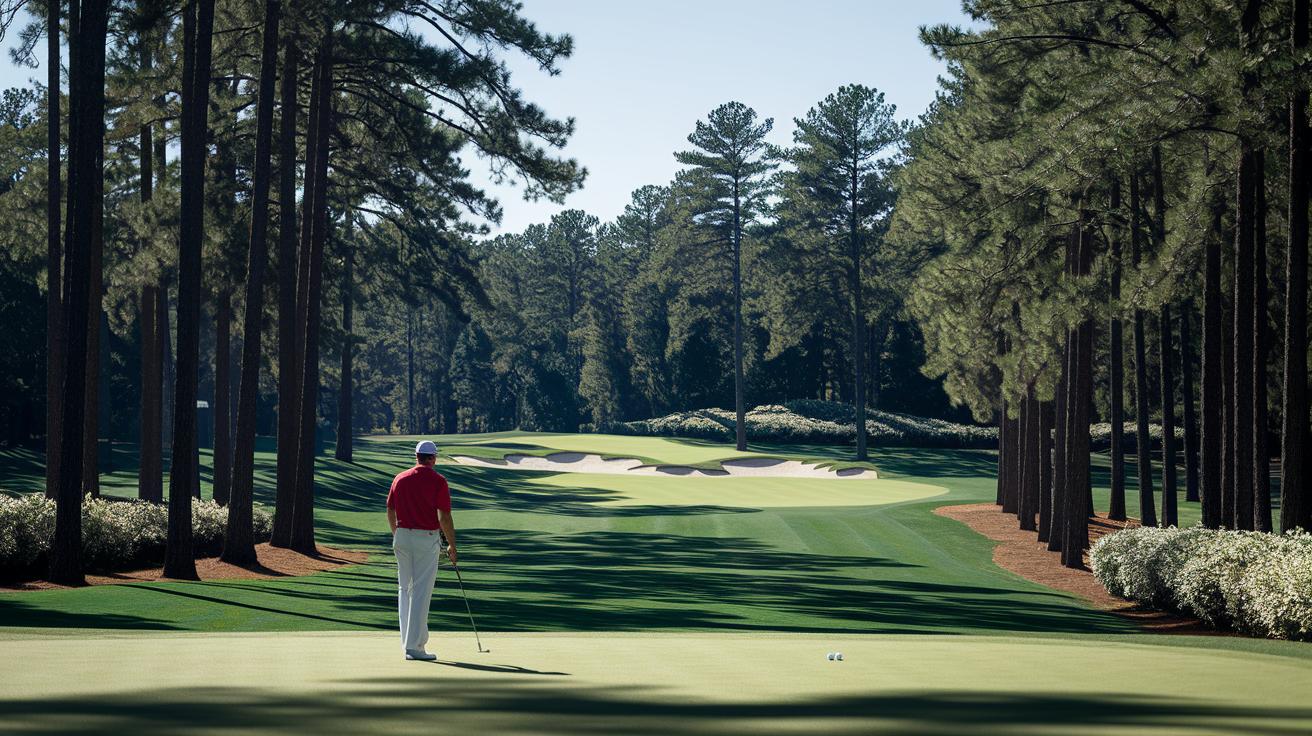
At Augusta National, the rolling greens and the famous Amen Corner demand smart club choices and nerves of steel. A wrong pick or a rushed swing can add an extra stroke. One golfer once said, "That perfect drive felt like threading a needle on a moving target."
At the U.S. Open, courses stretch over 7,200 yards with thick, tough rough that pushes players to stick to safe drives and accurate long irons. Every shot is planned carefully because the course leaves little room for mistakes.
Over at The Open Championship, natural links courses throw gusty winds and bumpy terrain into the mix. Adjusting for the wind and reading the course well can turn an average shot into a brilliant display of skill. And at PGA Championship venues, which change every year, precision and power go hand in hand. Players try out daring putting lines while keeping their drives steady off the tee.
Top players mix a few key tactics:
| Tactic | Description |
|---|---|
| Safe Driving | Taking careful shots on tough layouts |
| Bold Putting | Using aggressive strategies on fast, challenging greens |
| Mental Focus | Staying calm and sharp during high-pressure rounds |
Every top golfer adapts their style to suit each tournament's design. Each swing is a careful balance of smart risk-taking and creative flair, testing both skill and mental toughness on the world’s toughest courses.
Emerging Talent and the Future of Golf Grand Slam Tournaments
Next up, we see golfers on a mission to complete their career Grand Slams. Take Jordan Spieth for instance. He’s already celebrated wins at the Masters, U.S. Open, and The Open Championship. Now, everyone is watching as he fights for a PGA Championship victory. Fun fact: Spieth once turned a near miss into a lesson in resilience, every swing brought him one step closer to his dream.
Then there's Phil Mickelson. With three major wins under his belt, he’s now setting his sights on that elusive first U.S. Open title. His quest for a breakthrough win has fans on the edge of their seats, wondering if his illustrious career might hit another historic milestone.
Looking ahead, there could be some exciting changes in the tournament formats. Ideas like expanded playoffs or fewer players in the field are being discussed. Plus, there’s talk of boosting digital fan experiences and extending global broadcast coverage. These shifts could draw a whole new crowd of fans and push established stars to raise their game.
| Highlight | Description |
|---|---|
| Emerging Talents | Young golfers pushing the limits in major championships |
| Innovative Formats | New ideas like expanded playoffs and reduced field sizes |
It’s an exciting time for golf with fresh talent and bold changes just around the corner.
Final Words
In the action, the article broke down how golf’s top competitions challenge players and shape their careers. We covered everything from the historic milestones to the tough course setups.
The write-up also highlighted rising talent and fresh ideas that keep the sport exciting. Golf grand slam tournaments continue to inspire fans and players alike, reminding us that every swing and every moment counts.
FAQ
What golf tournaments make up the Grand Slam?
The Grand Slam comprises four tournaments—the Masters, U.S. Open, The Open Championship, and the PGA Championship. Winning all four is a rare and prized career achievement.
Has anyone won all four majors in one year of golf?
The calendar-year Grand Slam has been achieved only in the amateur era by Bobby Jones. No modern professional has won all four majors in a single season.
Which golfers have achieved a career Grand Slam?
Six golfers have completed a career Grand Slam: Bobby Jones, Gene Sarazen, Gary Player, Jack Nicklaus, Tiger Woods, and Rory McIlroy have all earned this mark of excellence in golf.
What is known about Tiger Woods’ Grand Slam achievement?
Tiger Woods secured his career Grand Slam in 2001 by winning each of the four majors at least once, reflecting his skill and enduring impact on professional golf.
What is known about Rory McIlroy’s Grand Slam achievement?
Rory McIlroy joined the Grand Slam club by winning the 2025 Masters, completing his collection of majors. His feat solidifies his place among the top golfers in history.
What do today’s Golf Grand Slam tournaments look like?
Today’s Grand Slam tournaments remain the four classic events. They feature updated formats and competitive fields that test players with unique course challenges and evolving prize trends.
What is notable about Scottie Scheffler’s Grand Slam performance?
Scottie Scheffler’s strong showings at the majors mark him as a rising star. His consistent performances in these events highlight his competitive edge on the big stage.
How rare are same-year Grand Slam wins in golf?
Same-year Grand Slam wins are extremely rare, with only Bobby Jones achieving this during the amateur era. Modern professionals face such intense competition that sweeping all four majors in one season is nearly impossible.