

Ever wondered why some courses just feel perfect for that smooth swing? The secret is in the grass under your feet.
Each type of grass has its own character. For instance, Bermuda gives a solid, bouncy feel on fairways, while Bentgrass offers a soft, smooth roll on greens.
We’re here to show you how warm-season and cool-season grasses can change your game. With the right turf, every shot feels better, and the whole course plays like a charm.
Stick with us, you’re about to see how the right grass can make all the difference on the course.
Overview of Golf Grass Varieties for Fairways, Greens, and Roughs

Every type of golf grass brings a special feel to the course, whether you're on a fairway, a green, or roaming the rough. Think of a perfectly trimmed fairway, it’s like stepping onto a smooth, freshly painted canvas that just invites you to play.
Let's talk warm-season grasses first. Bermuda grass loves heat and dryness. When it's mown really short on a fairway, it gives you a firm, fast surface that serious players appreciate. And Zoysia, another warm-season choice, stands tall with an upright blade so you always get a steady ball stance. These grasses usually shine in Southern regions where the sun and dry weather rule.
Then there are the cool-season grasses for milder climates. Bentgrass is a hit on greens during spring and fall because it offers a smooth, true roll that golfers treasure. Kentucky Bluegrass adds rich color and a lively bounce to lawns and fairways in Northern states. Poa annua grows quickly, which can sometimes lead to a bumpy green later in the day. Fescue is pretty flexible, it works well in naturally growing areas or in spots that are carefully mowed short. And Rye is often mixed with other grasses in the rough to give the course a balanced look and great playability.
Ever heard this cool fact? When cared for just right, Bermuda grass not only speeds up play but can feel as crisp as that first hit on a bright spring morning. This guide shows how matching each turf to its best spot boosts your game.
Regional Climate and Natural Turf Choices for Golf Grass

Regional weather plays a big role in picking the right golf grass. The temperature, soil pH, and rainfall all shape the choice of grass. In Southern states like Florida and California, warm-season options such as Bermuda and Zoysia thrive in hot, dry conditions. Bermuda offers a firm, fast surface that helps players keep their shots sharp, while Zoysia provides a steady ball stance even when the heat is on.
In cooler areas where temperatures usually fall between 60°F and 75°F, cool-season grasses like Bentgrass and Kentucky Bluegrass win out. Bentgrass is favored for its smooth roll and can even handle cold spells down to 20°F. Kentucky Bluegrass tends to go dormant near freezing but still keeps a lively color and bounce. In these regions, turf managers also pay close attention to soil pH and rain timing to steer their seed choices and adjust maintenance routines.
Curious about local green performance? Simply search for golf courses near me to get the latest insights.
Golf Grass: Prime Turf for Course Success

Keeping your course lush and ready for play starts with smart turf care. You gotta watch your greens, fairways, and roughs with regular mowing, watering, and air treatment. Aim to give your grass about 0.5 inches of water each week. This keeps it hydrated without drowning the roots. Twice a year, use core aeration along with monthly spiking to loosen the soil so every blade can breathe. And every month, topdress with a thin 1/8-inch layer of sand to smooth things over.
Make sure your mowing heights are spot on:
- Greens: 0.10–0.125 inches – This keeps the roll tight for those key putts.
- Fairways: 0.5–1 inch – Just the right length to set up a firm shot.
- Roughs: 1.5–2.5 inches – A bit longer for a softer landing while still staying playable.
These routines not only boost how the course plays but also help your turf stay healthy longer. Choosing the right equipment is important too. For instance, the TT-2410 Topdresser spreads sand evenly, while the Fairway Gang Roller helps relieve soil compaction. Then there's the Advantage Aerator to break up the soil for healthy roots, and tools like the FX650 Material Handler and a Heavy Duty Turf Roller keep everything smooth and easy to handle.
| Equipment Model | Function |
|---|---|
| TT-2410 Topdresser | Sand distribution |
| Fairway Gang Roller | Compaction relief |
| Advantage Aerator | Soil decompaction |
| FX650 Material Handler | Material management |
| Heavy Duty Turf Roller | Even turf laying |
Comparing Natural Golf Grass to Synthetic Turf Options
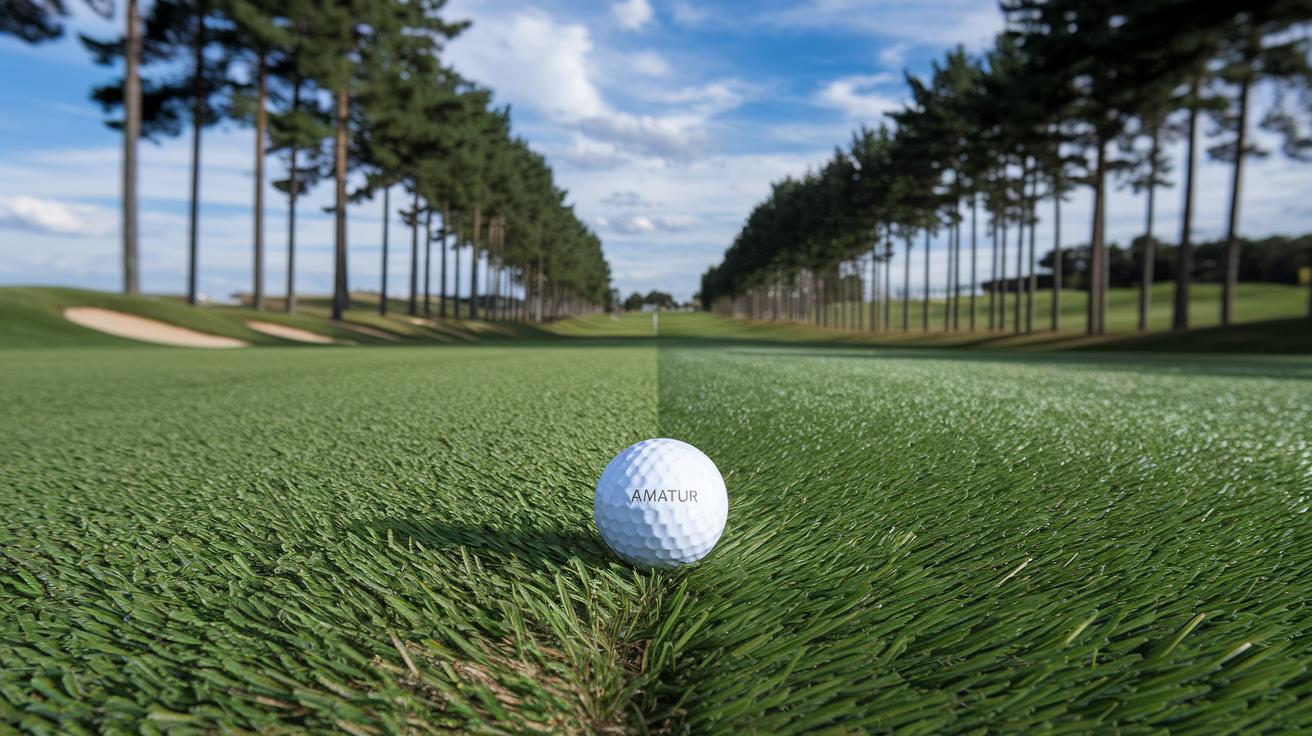
When you check out your course, you'll usually see two main options: natural grass and synthetic turf. Natural grass feels familiar underfoot, giving you that classic, live vibe on the course. On the flip side, synthetic turf is made from materials like nylon and polyethylene. Here’s a fun fact: when testing synthetic putting greens, many golfers found the ball roll so smooth it nearly matched the speed of Bentgrass (a finely cut grass used on greens)!
Synthetic turf offers some clear perks. It delivers a uniform ball roll every time and needs very little water, which can really save on resources. But, there are a few challenges too. Installing synthetic turf can cost anywhere between $9 and $35 per square foot. Plus, these surfaces can heat up quickly, in direct sunlight, temperatures may soar up to 15°F higher. They also require occasional brushing and infill top-ups to keep the playing surface level.
- Consistent ball roll every time
- Minimal water usage
- Can heat up under strong sun
- Extra care needed with brushing and infill
Looking ahead, many course managers believe that the long-term savings on upkeep can balance the initial investment over 10 to 15 years. It’s a smart option for those aiming to control costs while keeping playability top-notch.
Golf Grass: Prime Turf for Course Success

Getting your course ready starts with proper soil care. First, check your soil pH, aiming for between 6.0 and 7.0. Then, shape the land to have a gentle 1% to 2% slope. These steps help set up a turf that stays healthy and feels great to play on.
When it's time to install new grass, you have two main choices: sod or seed. Sod gives you a fast, ready-to-play field within 7 to 14 days. It usually costs about $0.50 to $1.50 per square foot. Meanwhile, quality turf seed is much easier on the wallet at roughly $0.10 per square foot, though you might need to wait 7 to 21 days for it to fully grow.
Here’s a quick guide:
- Test your soil pH and make sure it’s between 6.0 and 7.0.
- Grade the area to a smooth 1% to 2% slope.
- Choose sod if you want immediate playability, or seed if you prefer a lower cost.
- For sod, lay the pieces with staggered joints (like puzzle pieces) and roll the area right after putting it down to lock it in place.
- For seeding, mix the seed into the soil about 0.25 inches deep and sprinkle at a rate of 2–4 pounds per 1,000 square feet for cool-season grasses.
Imagine laying sod like putting together a giant puzzle, it fits together so well, making a surface that feels just right when you hit the ball. Whether you go with seed or sod, these steps make sure your course is all set for a perfect round.
Ongoing Golf Grass Care: Disease Prevention, Drought Resistance, and Seasonal Guidelines

Keeping your course looking its best means taking care of a few important tasks all year round. Drought-resistant grasses like Bermuda and Zoysia have roots that reach deep, so they can grab water even when it's very hot. Every year, remove about 0.25 inches of thatch to help fight off diseases. A good care routine can be the difference between a course that feels smooth to play on and one that leaves you frustrated.
In spring, add 1 lb of nitrogen for every 1,000 sq ft to give your grass a strong start. When summer comes, raise your mowing height by around 0.1 inches and water at dusk when it’s cooler, so your grass holds onto moisture better. This helps reduce stress and makes a big difference in how the turf looks and plays. To keep diseases like dollar spot and brown patch at bay, apply fungicides such as azoxystrobin and propiconazole.
When fall rolls in, core aerate and overseed any cool-season patches. This helps revive your grass before winter. Following this seasonal plan not only keeps the course playing nicely, but also prevents common turf problems that could spoil a great day on the links.
Cost and Investment Considerations for Golf Grass Projects

Breaking down turf costs means checking every little detail to keep your course in shape without any nasty surprises. Costs change based on the type of turf and how you care for it. For example, installing warm-season turf usually runs about $0.50 to $1.50 per square foot, while cool-season seed is around $0.10 per square foot. You should also remember that renting equipment like aerators can cost roughly $200 per day and labor tends to run at about $25 per hour.
It helps to think of your budget as a list of key parts:
- Turf and soil prep (the groundwork for a great course)
- Equipment needs (rentals or buys)
- Labor costs (for setup and ongoing care)
- Chemicals (like fertilizers and fungicides)
| Budget Item | Cost Estimate |
|---|---|
| Warm-season turf (installed) | $0.50–$1.50 per sq ft |
| Cool-season seed | $0.10 per sq ft |
| Aerator rental | $200 per day |
| Annual maintenance per acre | $4,000 |
By choosing resilient grass, you might even cut repair costs by about 15% over five years. Simple, clear planning goes a long way in keeping both your greens lush and your budget in check.
Final Words
in the action, the post broke down golf grass choices for fairways, greens, and roughs while matching each turf type to its ideal climate. We saw how warm-season and cool-season grasses, plus synthetic options, stack up against each other for cost and maintenance. Maintenance tips like optimal mowing heights and proper irrigation round out a winning plan. By understanding these basics, every course benefits from durable, healthy golf grass, making every round as smooth as a well-played putt. Enjoy the game!
FAQ
What is the price of golf grass?
The price of golf grass varies based on species and installation type. Costs range from a few dollars per square foot for seed to higher amounts for quality sod on fairways and greens.
What is the best grass for golf greens and overall golf courses?
The best grass for greens is often Bentgrass for its smooth surface, while Bermuda and Zoysia suit fairways in warmer regions due to their firmness and drought resistance.
What are common golf grass names and terms?
Common golf grass names include Bentgrass, Bermuda, Zoysia, Kentucky bluegrass, Festuca ovina, Agrostis stolonifera, Scutch grass, and Tall fescue, each chosen for specific playing qualities.
What do golf grass turf and seed refer to?
Golf grass turf is the established grass covering a course, while golf grass seed is used to plant new areas or repair worn spots, with each option tailored to climate and maintenance needs.
Can I grow golf course grass at home?
Growing golf course grass at home is possible by selecting a suitable turf variety for your local climate and following proper care routines like mowing, watering, and occasional fertilizing.
What is the role of Zoysia grass in golf courses?
Zoysia grass offers a sturdy, drought-tolerant surface that holds up well under heat, making it a popular choice for warm-weather courses looking for consistent ball roll and durability.
What type of grass is used on Florida golf courses?
In Florida, warm-season grasses such as Bermuda and Zoysia are commonly used because they handle the heat and drought conditions, providing a firm, resilient play surface.